
Opening a food business involves a hundred decisions, and waste is almost always made last. New premises food waste collection is nonetheless one of the few things a local authority will ask about at the first inspection, which frequently comes within weeks of opening. Getting it in place before the doors open costs an hour. Retro-fitting it after a poor first hygiene rating costs considerably more. Martlands is a family-run, DEFRA approved operator in Burscough licensed for all three ABP categories, and our fallen stock and ABP collection business sets up new food businesses across Lancashire, Merseyside and Greater Manchester.
This article is a practical setting-up guide covering what the law requires, what to arrange before opening, and the mistakes that most commonly appear on a first inspection report.
What a New Food Business Is Required to Do
Any premises preparing or serving food containing material of animal origin produces catering waste, which is Category 3 animal by-product material. It must leave the premises through an authorised route, accompanied by documentation, and it must be presented separately from general waste. That obligation applies from the day trading begins, not from the date of the first inspection, and it applies to a two-seat coffee shop as much as to a hundred-cover restaurant.
The separation duty now applying to businesses in England has made this a more visible requirement, and it has removed the argument that a small business generates too little to matter. Our guidance on the new business food waste separation law sets out what different premises need to have in place.
Deciding Which Streams You Will Produce
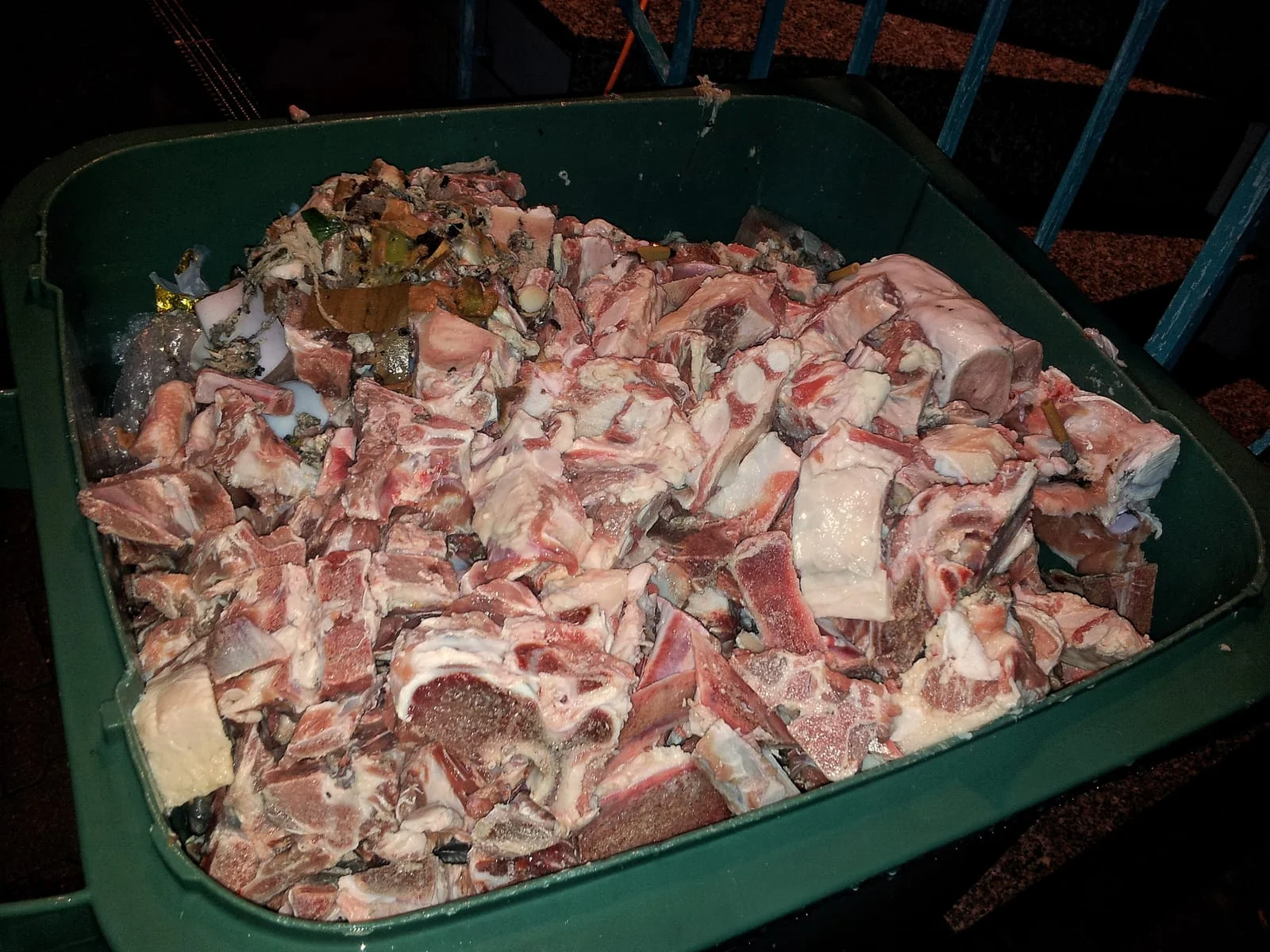
Before arranging anything, work out what the kitchen will actually generate. A café producing plate waste and preparation trimmings needs a food waste service. A butchery counter or a restaurant breaking down whole carcasses also produces bone and fat in volume, which is handled through butchers waste collection rather than in a food waste bin. A site with both needs both, and the containers need to be sized separately.
Used cooking oil, packaging, glass and general waste are separate streams again. The most common set-up error we see is a single food waste container expected to absorb everything, which produces an overflowing bin within a fortnight and a container that cannot lawfully take some of what is in it. Our combined food waste and by-product service covers the combined requirement where a site produces more than one stream.
Sizing and Frequency for a Business With No Trading History
A new business has no data, so the first schedule is an estimate. Estimate on the high side. A container that is too large costs a little space, while a container that is too small produces overflow, complaints and a difficult conversation with the environmental health officer at the worst possible moment.
Plan a review after the first six to eight weeks, once a genuine trading pattern has emerged, and adjust the frequency then. Seasonal businesses in particular should expect to change the schedule twice a year rather than settling on one arrangement. Martlands supplies leak-proof containers to food waste collection customers, and sizes can be changed as the pattern becomes clear.
Where the Bins Will Go
This is the decision most often made too late, because it constrains everything else. The storage area needs to be accessible to a collection vehicle, away from the customer entrance, on a washable surface draining to foul rather than surface water, secure against vermin and gulls, and reachable by kitchen staff without carrying waste through a dining area or a public corridor.
On a fitted-out unit this frequently means a decision at the design stage rather than after opening, and it is worth raising with the landlord before the lease is signed on a site with a shared yard. Our guidance on storage of animal by-products covers the standards a bin store needs to meet.
The Documents to Have on File Before You Open
An inspector will ask who collects your food waste and will want to see evidence. Every Martlands collection produces a Commercial Document recording the category of material, the nature and quantity collected, the date, the collecting vehicle and the receiving premises, and non-ABP waste movements are accompanied by a Waste Transfer Note. Keep them together and in date order from the first collection.
Waste handling contributes to the confidence in management element of a food hygiene rating, which is the component that most often prevents a new business achieving five at its first inspection. A documented arrangement and a tidy bin store answer the question before it is fully asked. Our note on guide to disposing of catering waste covers the producer duties in full.
Setting Up Across the Region
We set up new premises across the North West every month, from town centre units to farm diversification cafés and industrial estate production kitchens. Recent set-ups run through Ormskirk food waste collection, along the Sefton coast, and across the Chorley food waste collection area. Being minutes from the M58 and M6 from our Burscough base means a first collection can usually be arranged for opening week.
Getting Started
To set up a food waste arrangement for a new premises, call 01704 776977 or use the contact us page. We will confirm which streams your operation produces, size the containers, agree a frequency and have the service running before you open.
