
Hotels generate food waste in a pattern that no other hospitality business shares, with a heavy fixed load every morning and an entirely unpredictable one every evening. Martlands provides licensed fallen stock and ABP collection and commercial waste services across the North West, and hotel food waste collection has to be sized for the busy weeks rather than the average ones. A hotel that gets this wrong finds out on the Saturday of a wedding weekend, which is the worst possible time.
Breakfast Is the Predictable Part
Buffet breakfast service is the largest single source of food waste in most hotels and the easiest to plan for, because occupancy is known the night before. It is also the source of the most avoidable waste, since a buffet held at full display until the last guest has eaten generates substantial unsold product that cannot be carried forward. Hotels that have addressed this successfully have done it by managing replenishment rather than by reducing what is on offer.
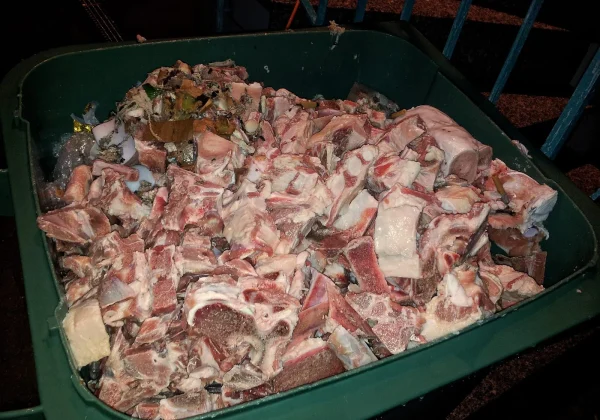
Whatever the volume, the classification is the same. Buffet returns, plate waste and preparation waste are catering waste containing material of animal origin and are regulated as animal by-product material. Our food waste and ABP collection handles this stream under Animal By-Products Licence No APB/CCN21/373/8002, with Waste Carrier Licence CB/QE5406MT and Site Licence EAWML/100236.
Banqueting Is Where the Volume Spikes
A hotel with function rooms is running two businesses, and the second one is far more volatile than the first. A wedding for a hundred and fifty, a conference dinner and a Christmas party season all produce volumes that dwarf the daily restaurant trade, and they arrive on dates known months in advance. That predictability is the opportunity. Send us the function diary and additional collections can be booked against it rather than discovered afterwards.
Plated banqueting service produces heavy plate waste because guests are served a fixed portion whether or not they want all of it, and the returns come back to the kitchen in a single wave at the end of each course. Bin capacity in the wash-up area needs to reflect that, not the average night.
Storage in a Building With Guests In It
The constraint that shapes everything in a hotel is that the waste route and the guest route must not intersect. Bin stores are typically at the back of house near a service yard, frequently close to car parking, staff entrances and sometimes ground floor bedrooms. Leak-proof containers with fitting lids are essential, hard standing and secure storage are the baseline, and drainage must not run to a watercourse.
Collection timing matters as much as containment. Early morning collections avoid guest movements, and they get the previous night’s function waste off site before the day warms up. Agree the window once and build it into the arrangement.
Seasonality Across the North West Hotel Trade
The regional hotel market has two quite different seasonal profiles running alongside each other. Coastal and resort hotels peak hard through the summer and school holidays and quieten considerably in the winter. City and business hotels run the opposite pattern, busy through the working weeks of the autumn and spring and quiet in August. A group operating both needs two schedules rather than one.
Wedding and function trade adds a third layer, concentrated through the summer and again in December. The practical answer is a base schedule with booked additions, reviewed twice a year rather than left to run unchanged. Our food waste collection is set up to work that way.
Reporting, Accreditation and Corporate Clients
Hotels are increasingly asked about waste and sustainability performance by corporate clients placing conference and accommodation business, and by accreditation schemes. That means the collection documentation has practical commercial value beyond compliance. Every collection produces Waste Transfer Notes and Commercial Documents where applicable, and these support ISO 14001 certification, local authority inspection and sustainability reporting equally.
Our guidance on ISO 14001 and sustainability reporting covers how to turn routine collection paperwork into the evidence base those exercises require, which is largely a matter of filing it consistently rather than doing anything additional.
Hotels With Care and Residential Elements
A number of operators run hotels alongside residential or care facilities, or provide catering into them, and the requirements there are slightly different because of the vulnerability of the residents and the stricter hygiene expectations that follow. Where that applies, our guidance on care home and hospital catering waste sets out the additional considerations.
The Coastal and Rural Hotel Belt
Our collection routes cover a considerable stretch of the West Lancashire and Merseyside coast, where a substantial hotel and guest house trade sits alongside a large function and wedding market. Properties in the Southport food waste collection area range from large seafront hotels with full banqueting operations to small guest houses generating a fraction of the volume but carrying exactly the same duty of care.
The same is true through Formby food waste collection and the villages along the coast road, where a number of smaller venues and country house properties sit close enough together to be served efficiently on a single round from Burscough.
Reviewing Your Arrangement
If your schedule has not been looked at since it was set up, it is almost certainly wrong in one direction or the other. Call 01704 776977 and we will review it against your occupancy and function diary, or arrange a site visit through contact us.