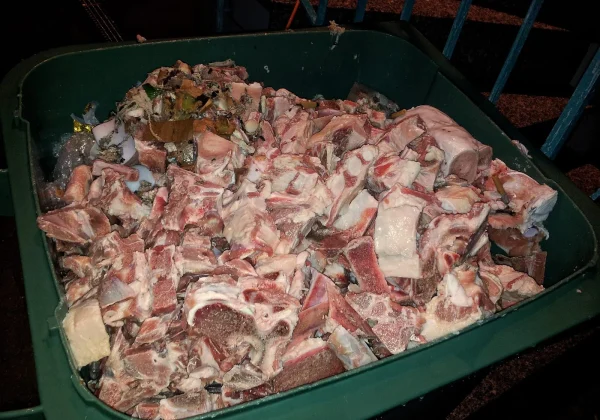

Farmers market food waste collection comes into its own through the summer, when the region’s markets, artisan food fairs and street food gatherings draw their biggest crowds and their busiest trade. Across the North West, from established farmers markets in the market towns to pop-up street food events in the cities, summer is peak season for producers and caterers selling directly to the public, and the food waste they generate has to be dealt with lawfully. A licensed provider of fallen stock and ABP collection covers this regulated stream, and Martlands supports markets and traders across the region from our Burscough base.
The Waste Behind the Stalls
A farmers market or street food event looks effortless from the customer side, but behind the stalls there is real food waste to manage. Producers trim and prepare, hot food traders generate kitchen waste and plate scrapings, and unsold perishable stock at the end of a hot day adds to the pile. Multiplied across a busy market and concentrated into a single trading day on a temporary site, it adds up quickly, and summer heat means it cannot simply be left.
Catering Waste and Former Foodstuffs
Hot food traders produce catering waste, which is regulated, while producers may end the day with unsold perishable goods that count as former foodstuffs, much of which falls under animal by-product rules where it contains products of animal origin. Both need lawful disposal through a licensed route. Our note on former foodstuffs and bakery waste explains how surplus and out-of-date food of animal origin is classified and collected, which is directly relevant to producers clearing their stalls.
The Separation Requirement for Traders
Under the simpler recycling rules, food waste must be separated and collected by a licensed operator, and market traders and organisers are within scope. On a temporary market site, that means providing clearly marked food waste points and arranging compliant collection rather than leaving traders to dump waste in whatever bin is nearest. Our explanation of the new business food waste separation law sets out what organisers need to put in place.
Heat and the End-of-Day Clear-Up
The end of a hot market day is when waste management matters most, as traders pack down and unsold perishables and kitchen waste all need clearing at once. Food waste left in the sun draws flies and creates odour, which is the last impression a market wants to leave on a town centre or park. Sealed, leak-proof containers and a collection timed to the market schedule keep the site clean. We provide leak-proof containers and can match collection to a market’s trading days.
Coverage Across the Market Towns
Our food waste collection serves the market towns and cities of the North West where summer markets and street food thrive. We hold dedicated provision for Leyland food waste collection and serve the wider region, building rounds that fit the schedule of a market rather than a generic weekly slot. That flexibility suits the irregular, seasonal nature of market trading.
Documentation for Organisers and Traders
Every collection comes with the appropriate Waste Transfer Note or equivalent, evidence of lawful disposal under the duty of care. For market organisers and for individual traders who may be inspected, that record demonstrates compliance and protects the reputation of the market as a well-run operation.
Set It Up for the Season
Markets that handle waste well plan for their summer peak, providing enough food waste capacity and booking collection around their busiest dates. A little forethought keeps the market clean, the traders compliant and the customers coming back.
Why Market Traders Sit in a Regulatory Grey Area
Farmers markets and street food events bring together small, independent traders who may not each have their own waste infrastructure, yet who collectively generate significant food waste and former foodstuffs through a summer trading day. Unsold produce, preparation waste and packaging-stripped stock all have to go somewhere compliant, and a trader used to taking a few bags home cannot lawfully do that with commercial food waste. The informal feel of a market can mask a real set of duties.
Putting Shared Collection in Place
The markets that handle this well provide a shared, organised collection arrangement that every trader can use, with sealed storage on site and a licensed collector booked around the trading calendar. That removes the temptation for individual traders to dispose of waste improperly and keeps the whole market on the right side of the rules. For markets that run weekly through the season, a standing arrangement is far simpler than booking event by event.
Protecting the Market’s Standing With the Council
Many farmers markets operate on council land or under local authority licence, which means their waste handling is visible to the same body that grants their pitch. Keeping storage clean, keeping collection frequent enough for summer volumes, and keeping documentation that proves a licensed route all protect the market’s standing and its right to keep trading in a prime location.
For organisers, building a single licensed collection point into the market layout from the outset is far easier than retrofitting one once traders and customers are established, and it sends a clear signal that the market takes its environmental responsibilities as seriously as it takes the quality of the produce on its stalls.
If you organise a farmers market or trade as a producer or street food vendor anywhere across the North West, call Martlands on 01704 776977 for reliable, compliant food waste collection through the summer season.