
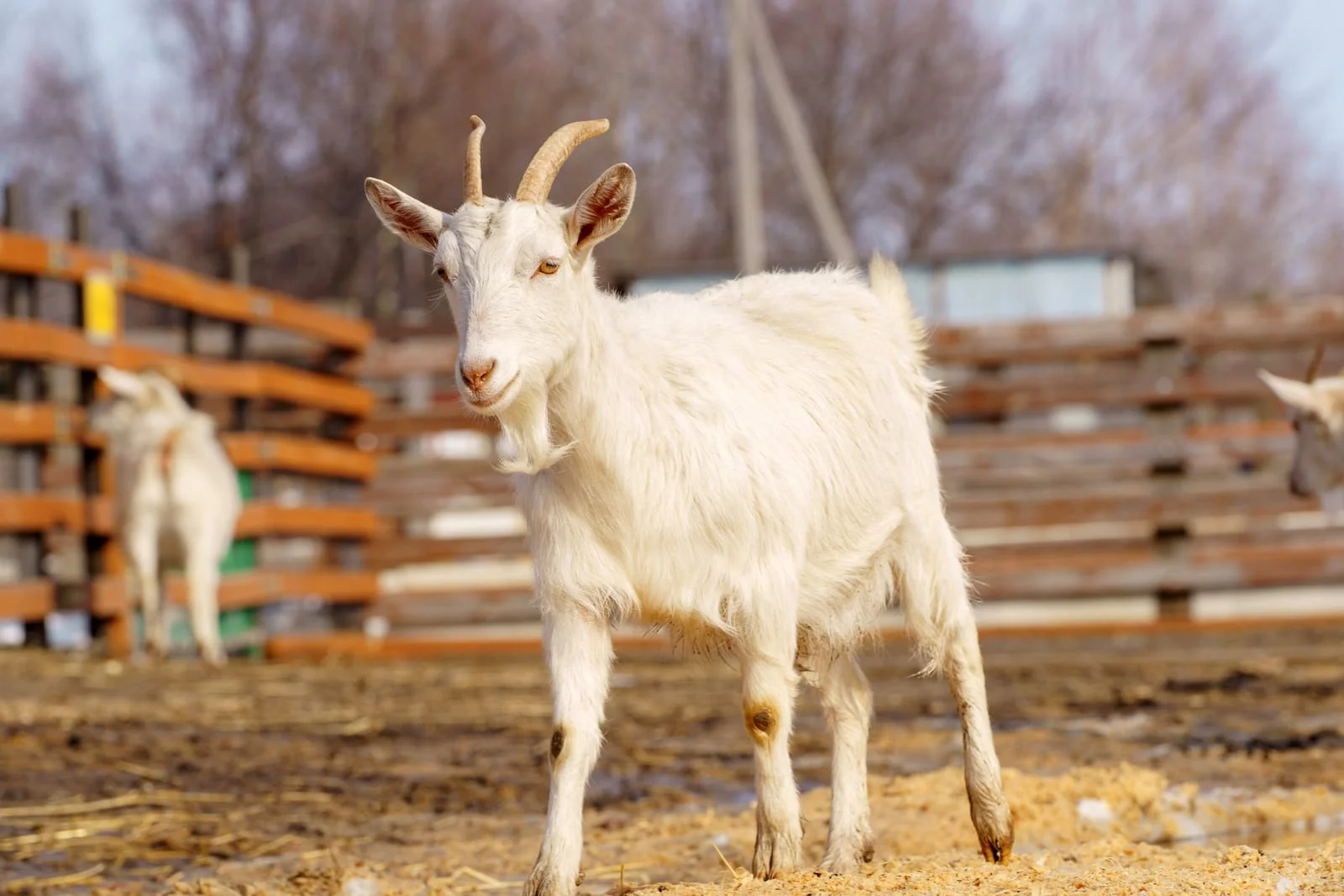
Smallholders and goat keepers are subject to exactly the same fallen stock law as large commercial farms, and many are surprised to learn that the duty applies even to a single animal kept on a paddock. Martlands offers licensed smallholder and goat fallen stock collection as part of our fallen stock and ABP collection service, working from our family-run, DEFRA-approved base in Burscough, Lancashire. Scale does not change the rules, and we make compliance straightforward for keepers with only a few animals.
The Law Applies Regardless of Herd Size
It is a common misconception that the regulations are aimed only at commercial operations. In reality, anyone keeping livestock, including hobby goat keepers, pygmy goat owners, smallholders with a handful of sheep, or those raising a few pigs for the freezer, has a duty of care to dispose of fallen stock through a licensed collector. Burying a dead goat at the bottom of the field or burning it on a bonfire has been illegal since 2003, and the limited remote-area exceptions almost never apply to the kind of land smallholders typically keep. Our blog on the ban on burying or burning fallen stock explains why the practice was outlawed and what the consequences of getting it wrong can be.
Why Smallholders Often Get Caught Out
Larger farms tend to have established collection relationships and understand the documentation. Smallholders frequently have neither, and an unexpected death prompts a scramble to work out what to do. The answer is the same as it is for any keeper, which is to contact a licensed collector, store the animal appropriately in the meantime, and retain the paperwork. Because losses on a smallholding are usually occasional rather than routine, an on-demand collection rather than a fixed schedule is normally the right approach.
Storing a Single Animal Before Collection
Even one carcass needs to be handled correctly. Keep the animal away from other livestock, pets and watercourses, covered and protected from scavengers, and on a hard surface where practical. Decomposition and the disease risk it carries are the reasons prompt collection matters, and our guide on the guide to disposing of fallen stock covers the practical steps a keeper should take from the moment an animal is found.
Documentation Even for Hobby Keepers
Every collection, however small, comes with a Commercial Document recording the movement of the carcass to an approved facility. Keepers registered with a holding number should retain these records, and they are useful evidence of responsible management if a question is ever raised. As an NFSCO member, Martlands keeps this paperwork consistent whether we are collecting from a 500-head flock or a single animal.
Coverage for Rural and Upland Keepers
Smallholdings are often tucked away in places a general waste contractor will not reach, which is where a dedicated fallen stock operator with a rapid-response fleet comes into its own. We collect across the Lake District and the wider county, and keepers can read about our Cumbria fallen stock collection coverage or our market-town focused Kendal fallen stock collection service. For those further afield, our national fallen stock collection reach means distance is rarely an obstacle.
Arranging a Collection
If you keep goats, sheep, pigs or any other livestock on a smallholding and have lost an animal, you have a legal duty to dispose of it properly and we make that simple. Call Martlands on 01704 776977 to arrange a collection, and we will handle the carcass and the paperwork so you can be confident you have met your obligations.
