
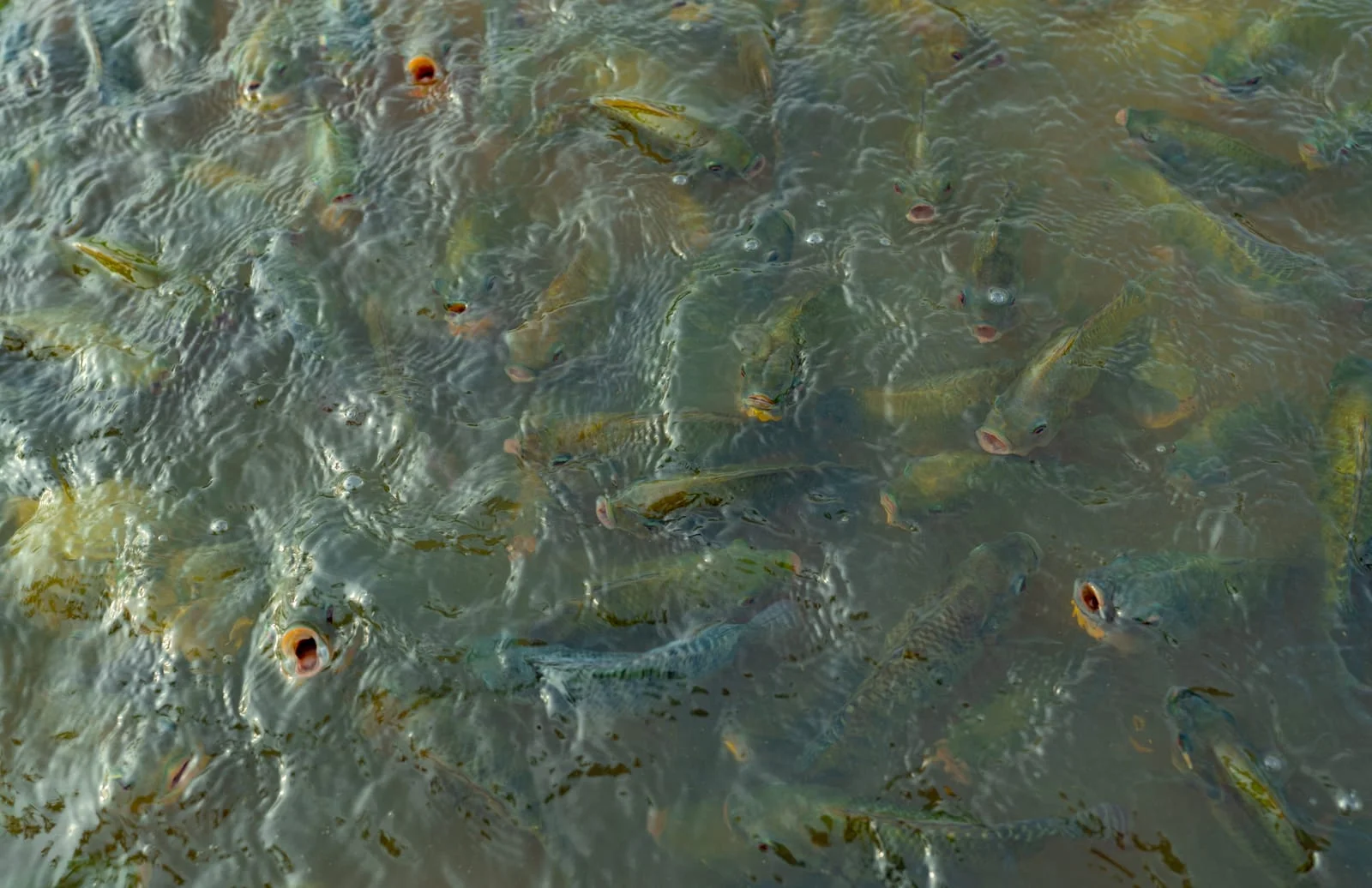
Fish farming sits within the animal by-product framework just as terrestrial livestock does, yet aquaculture operators are often less familiar with their obligations around mortalities and processing by-products. Martlands provides licensed collection for the sector as part of our fallen stock and ABP collection service, working from our family-run, DEFRA approved base in Burscough, Lancashire. Whether you run a trout farm, a hatchery or a processing operation, the ABP rules apply and we make them manageable.
Fish Are Animal By-Products Too
It is easy to forget that fish fall within the same regulatory family as cattle and sheep, but dead farmed fish and the by-products of fish processing are animal by-products and must be handled accordingly. Mortalities are a normal part of aquaculture, arising from disease, water quality events, predation or routine losses, and they cannot simply be disposed of informally. The category a given quantity of material falls into depends on its origin, with fish that died of disease or other causes other than slaughter for human consumption sitting differently from clean processing by-products of fish that entered the food chain.
Handling Mortalities
A significant mortality event on a fish farm can produce a large quantity of material quickly, and having a licensed collection route arranged in advance turns a potential crisis into a managed process. Storage in suitable sealed containers, prompt collection, and correct documentation keep the situation compliant even when volumes spike. Knowing what an animal by-product is in the first place helps operators recognise their obligations, and our blog on what are animal by-products provides that grounding.
Processing By-Products
Aquaculture businesses that process their own fish generate trimmings, heads, frames and offal, and where these arise from fish fit for human consumption they are typically Category 3 material with onward processing options. Keeping this stream separate, stored cool, and documented preserves its classification and value. Our Category 3 ABP collection service covers exactly this kind of clean processing by-product.
Documentation and Approved Routes
As with any ABP stream, every collection we make for an aquaculture operation comes with the documentation needed to prove lawful disposal to an approved facility. For a sector under increasing environmental scrutiny, being able to evidence responsible handling of mortalities and by-products is a genuine asset, not just a box to tick.
Reaching Upland and Coastal Sites
Fish farms are frequently sited in upland river catchments and coastal areas where access can be demanding, and our reach extends well into Cumbria where much of the region’s aquaculture is found. Operators can read about our Cumbria ABP collection coverage, serving the lakes, rivers and coast of the county.
Planning for a Mass Mortality Event
The defining risk in aquaculture is that a single event, a disease outbreak, a pump failure, an oxygen crash or a pollution incident, can kill a large proportion of stock in a very short time. When that happens, the volume of material vastly exceeds normal losses and needs removing quickly before it compounds the water quality problem that may have caused it. Having a licensed collector who understands the sector and can respond to a surge means a mass mortality is handled as a managed clean-up rather than spiralling into a secondary environmental incident. We would always rather discuss contingency arrangements with an operator before such an event than during one.
Setting Up Collection
If you run an aquaculture operation, your mortalities and processing by-products are animal by-products that need a licensed collector and proper documentation. Call Martlands on 01704 776977 to arrange compliant collection scaled to your site, including a plan for handling larger mortality events.

